Local tips
Keeping a van running in Cuba
Before a transfer in my Hyundai Grand Starex, there is work to do in the workshop: checking the cooling system, brakes, tyres and spare parts.
Enrique Díaz
Published: · Updated:
Last reviewed:
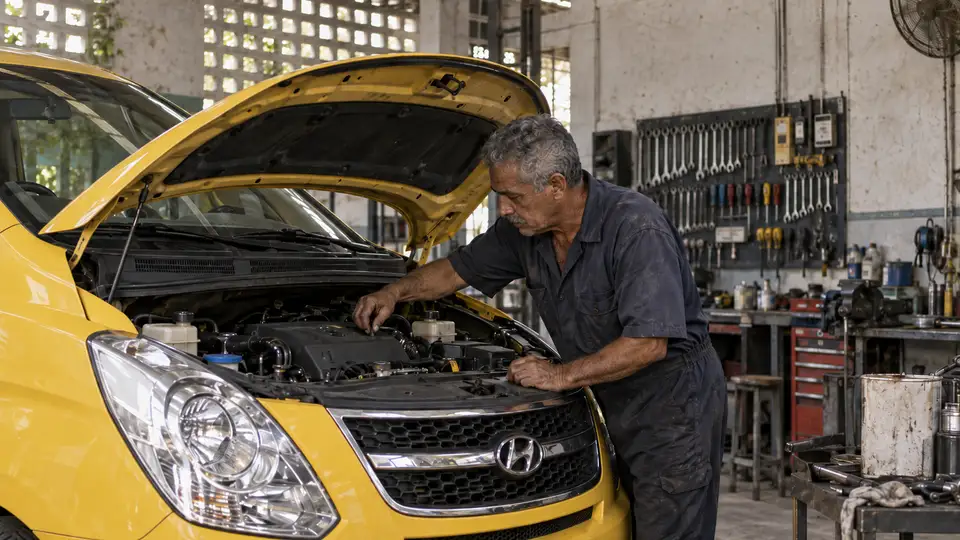
Preparing for a transfer in Havana starts days beforehand, with the bonnet open and my hands working on the engine. Getting a replacement part takes planning and patience. That is why maintenance is part of the job before I set off to collect a traveller.
Listening to the vehicle before something fails
My work in transport began more than 34 years ago in the workshop at the Ciudad Deportiva taxi base. Before driving saloon cars, minibuses and my current Hyundai Grand Starex, I learned to take gearboxes apart, adjust brakes and understand how each component responds to everyday wear.
That experience helps me recognise an unusual vibration, the first signs of noise from a bearing or a rise in coolant temperature. These are signs worth checking before heading onto the Autopista Nacional or taking the Vía Blanca towards Varadero, especially when a traveller has a flight to catch.
The wear caused by our roads
The heat means the cooling system needs attention. Uneven road surfaces wear down suspension bushes and shock absorbers, while dust on roads between towns means the filters need regular checks.
In the workshop, we follow this preventive maintenance routine:
- Weekly mechanical checks: we inspect hoses, fluid levels, the diesel injection system and the condition of the brake fluid.
- Air conditioning: we clean the condenser regularly and check the compressor so that cool air reaches every row of seats.
- Running gear and tyres: we check tyre pressures and tread wear, taking the luggage load into account.
- Spare parts: we buy consumables and the parts needed for scheduled maintenance in advance.
This work aims to reduce breakdowns during journeys and keep the van ready for the next pickup.